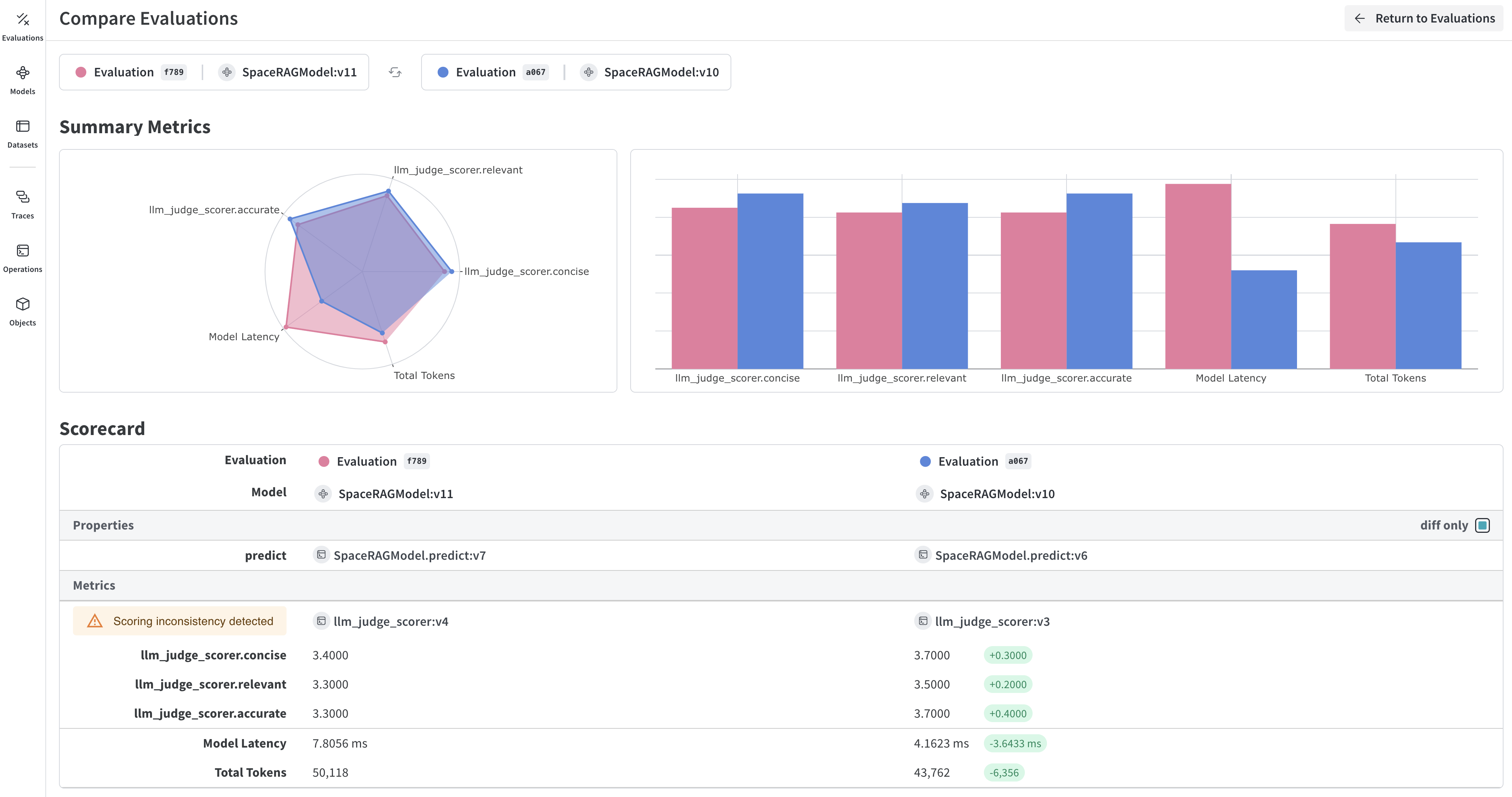
이 튜토리얼에서는 Weave에서 엔드투엔드 평가 파이프라인을 구축하는 방법을 안내합니다. 이를 통해 LLM 애플리케이션을 반복적으로 개선하는 과정에서 품질을 측정하고 추적할 수 있습니다. 평가는 일관된 예시 세트를 기준으로 변경 사항을 비교하고, 문제가 사용자에게 영향을 미치기 전에 회귀를 감지하는 데 도움이 됩니다. 이 튜토리얼은 LLM 기반 애플리케이션을 구축하며, 이를 반복적으로 테스트할 수 있는 재현 가능한 방법을 원하는 개발자를 대상으로 합니다.Weave는 Model 및 평가 클래스를 통해 평가 추적을 기본적으로 지원합니다. API는 전제를 최소화하도록 설계되어 있어 다양한 사용 사례에 적합합니다.
라이브러리를 준비했으면, 다음 단계는 평가할 모델을 정의하는 것입니다.Weave에서 Models는 객체이며, 모델 또는 에이전트의 동작(로직, prompt, parameters)과 버전 관리되는 메타데이터(parameters, 코드, 마이크로 설정)를 함께 캡처하므로 안정적으로 추적, 비교, 평가하고 반복적으로 개선할 수 있습니다.Model을 인스턴스화하면 Weave가 해당 설정과 동작을 자동으로 캡처하고, 변경이 발생하면 버전을 업데이트합니다. 따라서 반복적으로 개선하는 과정에서 시간에 따른 성능 변화를 추적할 수 있습니다.Model을 선언하려면 Model을 서브클래싱하고, 하나의 예시를 입력받아 응답을 반환하는 predict 함수를 구현하세요.다음 예시 모델은 OpenAI를 사용해 입력 문장에서 외계 과일의 이름, 색상, 맛을 추출합니다.
Python
TypeScript
class ExtractFruitsModel(weave.Model):
    model_name: str
    prompt_template: str

    @weave.op()
    async def predict(self, sentence: str) -> dict:
        client = openai.AsyncClient()

        response = await client.chat.completions.create(
            model=self.model_name,
            messages=[
                {"role": "user", "content": self.prompt_template.format(sentence=sentence)}
            ],
        )
        result = response.choices[0].message.content
        if result is None:
            raise ValueError("No response from model")
        parsed = json.loads(result)
        return parsed
// 참고: TypeScript에서는 아직 weave.Model이 지원되지 않습니다.// 대신 모델과 유사한 함수를 weave.op로 래핑하세요import * asweave from 'weave';importOpenAI from 'openai';constopenaiClient = newOpenAI();constmodel =weave.op(async functionmyModel({datasetRow}) { constprompt = `Extract fields ("fruit": <str>, "color": <str>, "flavor") from the following text, as json: ${datasetRow.sentence}`; constresponse = awaitopenaiClient.chat.completions.create({model: 'gpt-3.5-turbo',messages: [{ role: 'user', content:prompt }],response_format: { type: 'json_object' } }); returnJSON.parse(response.choices[0].message.content);});
ExtractFruitsModel 클래스는 Weave가 인스턴스화된 객체를 추적할 수 있도록 weave.Model을 상속합니다. @weave.op는 predict 함수를 데코레이트하여 입력과 출력을 추적합니다.다음과 같이 Model 객체를 인스턴스화할 수 있습니다.
Python
TypeScript
# 팀과 프로젝트 이름을 설정하세요weave.init('[YOUR-TEAM]/eval_pipeline_quickstart')model = ExtractFruitsModel( model_name='gpt-3.5-turbo-1106', prompt_template='Extract fields ("fruit": <str>, "color": <str>, "flavor": <str>) from the following text, as json: {sentence}')sentence = "There are many fruits that were found on the recently discovered planet Goocrux. There are neoskizzles that grow there, which are purple and taste like candy."print(asyncio.run(model.predict(sentence)))# Jupyter Notebook에서는 다음을 실행하세요:# await model.predict(sentence)
awaitweave.init('eval_pipeline_quickstart');constsentence = "There are many fruits that were found on the recently discovered planet Goocrux. There are neoskizzles that grow there, which are purple and taste like candy.";constresult = awaitmodel({ datasetRow: { sentence } });console.log(result);
Model을 정의했으면, 이제 이를 평가할 데이터셋이 필요합니다. Dataset은 Weave 객체로 저장된 예시 모음입니다. 데이터셋을 Weave에 게시하면 버전이 지정되며 여러 평가 run에서 재사용할 수 있습니다.다음 예제 데이터셋은 세 개의 입력 예시 문장과 해당 정답(labels)을 정의한 뒤, 스코어링 함수s가 읽을 수 있는 JSON 테이블 형식으로 구성합니다.이 예시에서는 코드에서 예시 목록을 만들지만, 실행 중인 애플리케이션에서 예시를 하나씩 로깅할 수도 있습니다.
Python
TypeScript
sentences = ["There are many fruits that were found on the recently discovered planet Goocrux. There are neoskizzles that grow there, which are purple and taste like candy.","Pounits are a bright green color and are more savory than sweet.","Finally, there are fruits called glowls, which have a very sour and bitter taste which is acidic and caustic, and a pale orange tinge to them."]labels = [ {'fruit': 'neoskizzles', 'color': 'purple', 'flavor': 'candy'}, {'fruit': 'pounits', 'color': 'bright green', 'flavor': 'savory'}, {'fruit': 'glowls', 'color': 'pale orange', 'flavor': 'sour and bitter'}]examples = [ {'id': '0', 'sentence': sentences[0], 'target': labels[0]}, {'id': '1', 'sentence': sentences[1], 'target': labels[1]}, {'id': '2', 'sentence': sentences[2], 'target': labels[2]}]
constsentences = [ "There are many fruits that were found on the recently discovered planet Goocrux. There are neoskizzles that grow there, which are purple and taste like candy.", "Pounits are a bright green color and are more savory than sweet.", "Finally, there are fruits called glowls, which have a very sour and bitter taste which is acidic and caustic, and a pale orange tinge to them."];constlabels = [ { fruit: 'neoskizzles', color: 'purple', flavor: 'candy' }, { fruit: 'pounits', color: 'bright green', flavor: 'savory' }, { fruit: 'glowls', color: 'pale orange', flavor: 'sour and bitter' }];constexamples =sentences.map((sentence, i) => ({id:i.toString(),sentence,target:labels[i]}));
이제 모델과 데이터셋이 있으므로, 각 예시에서 모델이 얼마나 잘 수행하는지 측정할 방법이 필요합니다. 점수화 함수는 모델의 output을 예상 target과 비교하고 평가에서 보고할 메트릭을 생성합니다.Weave 평가를 사용할 때 Weave는 output과 비교할 target이 있어야 합니다. 다음 점수화 함수는 두 개의 딕셔너리(target 및 output)를 받아, output이 target과 일치하는지를 나타내는 불리언 값 딕셔너리를 반환합니다. @weave.op() 데코레이터를 사용하면 Weave가 점수화 함수의 실행을 추적할 수 있습니다.
직접 점수화 함수를 만드는 방법에 대한 자세한 내용은 Scorer 가이드를 참조하세요.일부 애플리케이션에서는 맞춤형 Scorer 클래스를 만들고 싶을 수 있습니다. 예를 들어, 특정 매개변수(예: 채팅 모델 또는 프롬프트), 특정 행 스코어링, 집계 점수 계산을 포함하는 표준화된 LLMJudge 클래스를 만들 수 있습니다. 자세한 내용은 RAG 애플리케이션의 모델 기반 평가에서 Scorer 클래스를 정의하는 튜토리얼을 참조하세요.
모델, 데이터셋, 맞춤형 Scorer가 준비되었으면, 이제 모든 요소를 연결해 평가 run으로 구성할 수 있습니다.맞춤형 점수화 함수와 함께 Weave의 기본 제공 Scorer도 사용할 수 있습니다. 다음 평가에서 weave.Evaluation()은 이전 섹션에서 정의한 fruit_name_score 점수화 함수와 F1 점수를 계산하는 기본 제공 MultiTaskBinaryClassificationF1 Scorer를 사용합니다.다음 예제에서는 두 함수로 점수를 계산해 fruits 데이터셋에서 ExtractFruitsModel을 평가하고, 결과를 Weave에 기록합니다.
Python
TypeScript
weave.init('eval_pipeline_quickstart')evaluation = weave.Evaluation( name='fruit_eval', dataset=dataset, scorers=[ MultiTaskBinaryClassificationF1(class_names=["fruit", "color", "flavor"]), fruit_name_score ],)print(asyncio.run(evaluation.evaluate(model)))# Jupyter Notebook에서 실행 중이라면 다음을 실행하세요:# await evaluation.evaluate(model)
import jsonimport asyncioimport openaiimport weavefrom weave.scorers import MultiTaskBinaryClassificationF1# Weave 초기화 (한 번만)weave.init('eval_pipeline_quickstart')# 1. 모델 정의class ExtractFruitsModel(weave.Model): model_name: str prompt_template: str @weave.op() async def predict(self, sentence: str) -> dict: client = openai.AsyncClient() response = await client.chat.completions.create( model=self.model_name, messages=[{"role": "user", "content": self.prompt_template.format(sentence=sentence)}], ) result = response.choices[0].message.content if result is None: raise ValueError("No response from model") return json.loads(result)# 2. 모델 인스턴스화model = ExtractFruitsModel( model_name='gpt-3.5-turbo-1106', prompt_template='Extract fields ("fruit": <str>, "color": <str>, "flavor": <str>) from the following text, as json: {sentence}')# 3. 데이터셋 생성sentences = ["There are many fruits that were found on the recently discovered planet Goocrux. There are neoskizzles that grow there, which are purple and taste like candy.","Pounits are a bright green color and are more savory than sweet.","Finally, there are fruits called glowls, which have a very sour and bitter taste which is acidic and caustic, and a pale orange tinge to them."]labels = [ {'fruit': 'neoskizzles', 'color': 'purple', 'flavor': 'candy'}, {'fruit': 'pounits', 'color': 'bright green', 'flavor': 'savory'}, {'fruit': 'glowls', 'color': 'pale orange', 'flavor': 'sour and bitter'}]examples = [ {'id': '0', 'sentence': sentences[0], 'target': labels[0]}, {'id': '1', 'sentence': sentences[1], 'target': labels[1]}, {'id': '2', 'sentence': sentences[2], 'target': labels[2]}]dataset = weave.Dataset(name='fruits', rows=examples)weave.publish(dataset)# 4. 점수화 함수 정의@weave.op()def fruit_name_score(target: dict, output: dict) -> dict: return {'correct': target['fruit'] == output['fruit']}# 5. 평가 실행evaluation = weave.Evaluation( name='fruit_eval', dataset=dataset, scorers=[ MultiTaskBinaryClassificationF1(class_names=["fruit", "color", "flavor"]), fruit_name_score ],)print(asyncio.run(evaluation.evaluate(model)))
import * asweave from 'weave';importOpenAI from 'openai';// Weave를 한 번 초기화합니다awaitweave.init('eval_pipeline_quickstart');// 1. 모델 정의// 참고: weave.Model은 아직 TypeScript에서 지원되지 않습니다.// 대신, 모델과 유사한 함수를 weave.op으로 래핑하세요constopenaiClient = newOpenAI();constmodel =weave.op(async functionmyModel({datasetRow}) { constprompt = `Extract fields ("fruit": <str>, "color": <str>, "flavor": <str>) from the following text, as json: ${datasetRow.sentence}`; constresponse = awaitopenaiClient.chat.completions.create({model: 'gpt-3.5-turbo',messages: [{ role: 'user', content:prompt }],response_format: { type: 'json_object' } }); returnJSON.parse(response.choices[0].message.content);});// 2. 데이터셋 생성constsentences = [ "There are many fruits that were found on the recently discovered planet Goocrux. There are neoskizzles that grow there, which are purple and taste like candy.", "Pounits are a bright green color and are more savory than sweet.", "Finally, there are fruits called glowls, which have a very sour and bitter taste which is acidic and caustic, and a pale orange tinge to them."];constlabels = [ { fruit: 'neoskizzles', color: 'purple', flavor: 'candy' }, { fruit: 'pounits', color: 'bright green', flavor: 'savory' }, { fruit: 'glowls', color: 'pale orange', flavor: 'sour and bitter' }];constexamples =sentences.map((sentence, i) => ({id:i.toString(),sentence,target:labels[i]}));constdataset = newweave.Dataset({name: 'fruits',rows:examples});awaitdataset.save();// 3. 점수화 함수 정의constfruitNameScorer =weave.op( functionfruitNameScore({target, output}) { return { correct:target.fruit ===output.fruit }; });// 4. 평가 실행constevaluation = newweave.Evaluation({name: 'fruit_eval',dataset:dataset,scorers: [fruitNameScorer],});constresults = awaitevaluation.evaluate(model);console.log(results);